Food-Safe Bowl Finishes: A Careful Starting Point
Finish advice becomes clearer when use, cure and future care are considered together.
Define the use
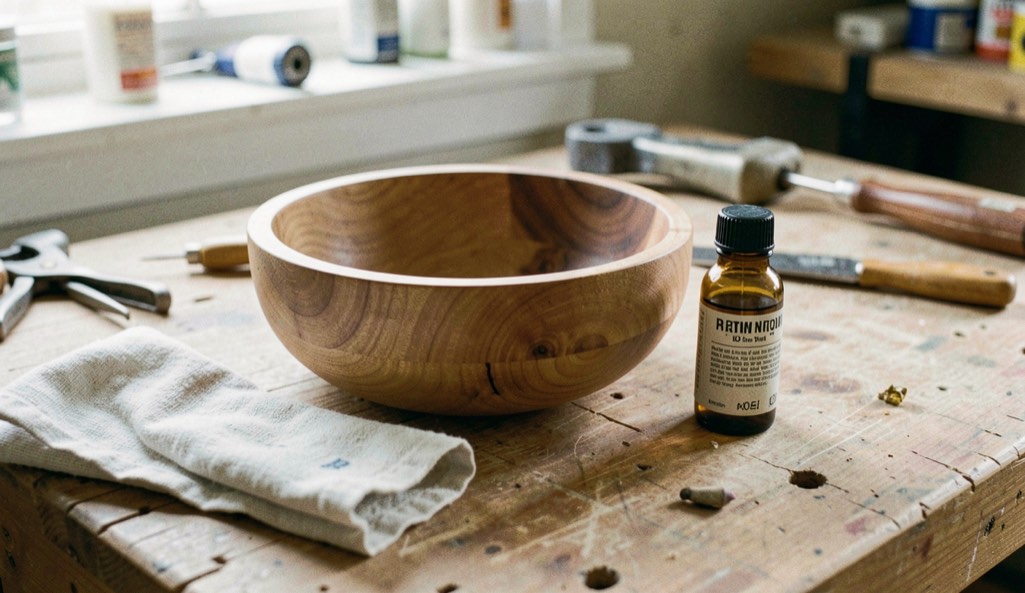
A bowl for dry fruit, a salad bowl and a decorative vessel do not face the same routine. Start with the object’s use and follow the finish maker’s directions for cure time, application and food contact.
Thin coats, patient cure
Many finishes reward a clean surface and light coats. Let each layer cure fully before judging sheen or adding another. The grain is part of the object, so a finish should protect and clarify rather than bury it.
Plan for care
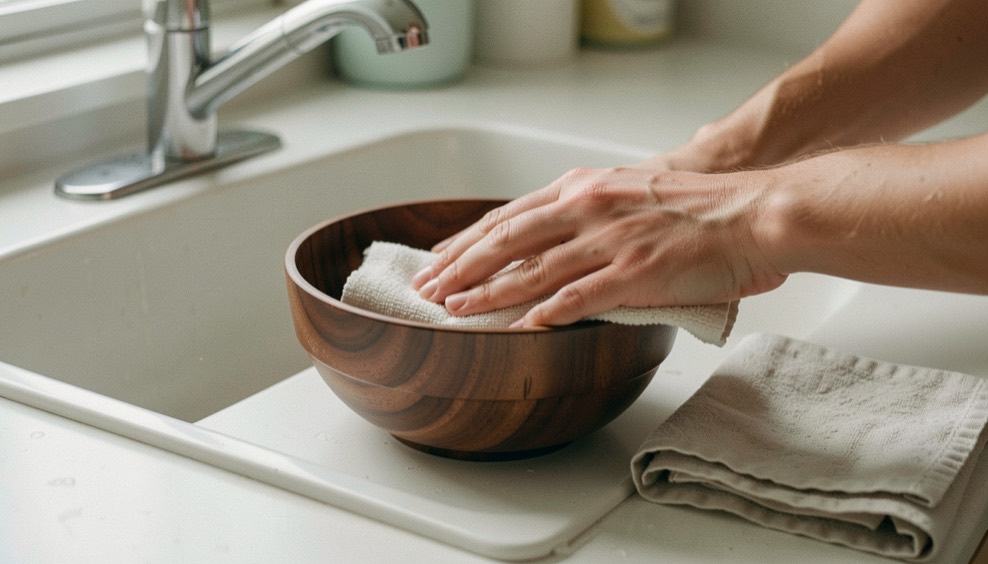
Tell the future user how to wash and refresh the surface. The turned bowl care guide makes the finish a durable part of the design rather than a last-minute gloss.
Define food contact precisely
Food use is not one category. A bowl for dry bread, a salad server, a wet salad bowl and a decorative form face different exposure and cleaning patterns. Read the manufacturer’s label for the exact product and intended contact, then follow its application and cure instructions. Do not infer food safety from the word natural, from a pleasant smell or from a finish used successfully on furniture. Keep the product container or technical sheet with the object so a future owner knows what was applied.
Prepare the surface before the finish
A finish cannot repair torn grain, sanding scratches or dust packed into a porous surface. Scrape or cut cleanly, sand through a deliberate sequence, remove residue without blowing it into the room, and test on an offcut from the same species. Thin coats usually make curing and inspection easier, but the correct film thickness is product-specific. Cherry, maple, walnut and oak can all change color differently under the same finish. Ventilation, gloves and the product’s solvent precautions matter as much as sheen.
Describe care and limits
A useful care note says whether the object is for dry or wet use, how it should be washed, and when the surface should be refreshed or retired. Do not promise that an oil makes a bowl dishwasher-proof, heat-proof or crack-proof. For example, a cured finish on a small maple serving bowl can support brief hand washing while the bowl still needs prompt drying and protection from a radiator. If the surface becomes cloudy, sticky or cracked, stop improvising and consult the product instructions or a qualified finisher.
Document the cure
Write the product name, coats, dates, ventilation and final cure date on a card that travels with the bowl. If the label distinguishes dry time from full cure, use the longer instruction for the intended contact and do not assume a surface is ready because it feels dry. Test the finish in the actual handling routine before gifting the object. This protects a reader from a common mistake: applying a familiar product to a new use without checking the technical sheet. A careful note is part of the finish and part of the editorial credibility.
Precise safety and material claims are grounded in the editorial methodology; workshop guidance is identified as practical synthesis.