Drying Bowl Blanks Without Losing the Story
Moisture movement is part of the design problem. A patient drying plan gives a blank a better chance to become a stable object.
Green is not a finish
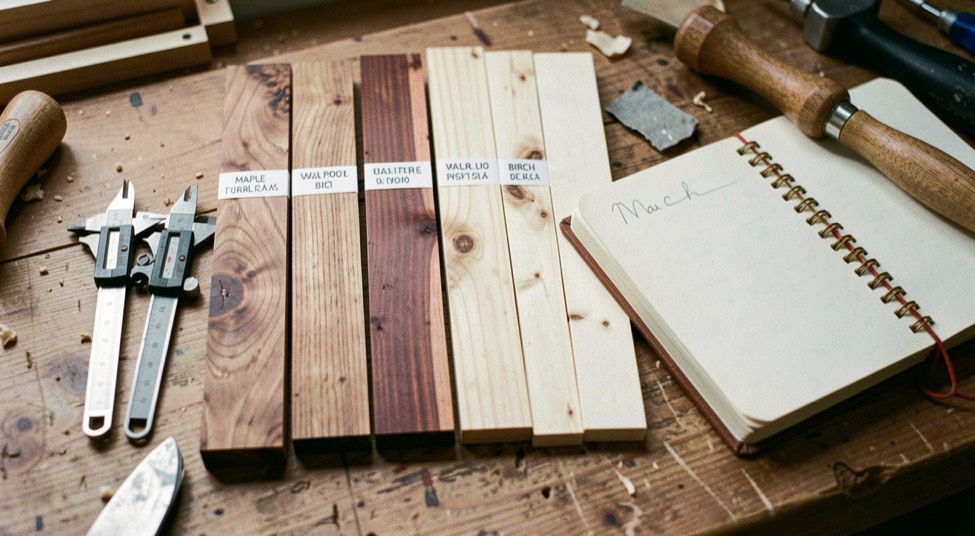
A fresh blank contains more moisture than a finished indoor object can hold. As it dries, the wood changes dimension and can check. The species desk is a starting point for understanding those tendencies, not a promise that a blank will behave.
Slow the extremes
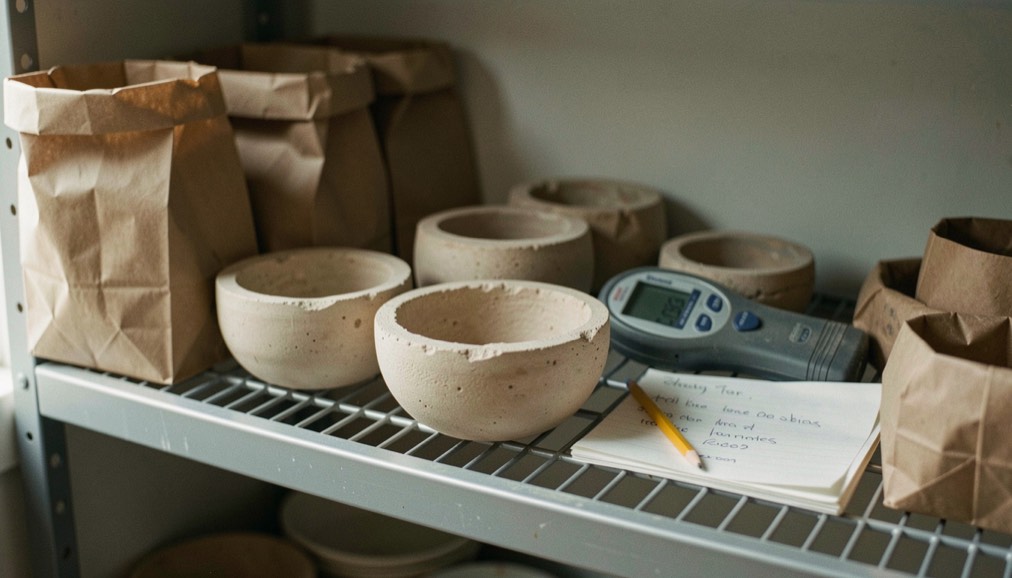
Keep blanks out of direct heat and give air a consistent path. The exact schedule depends on species, thickness, shape and local conditions. Record dates and observations so the next batch teaches you something.
Turn with a plan
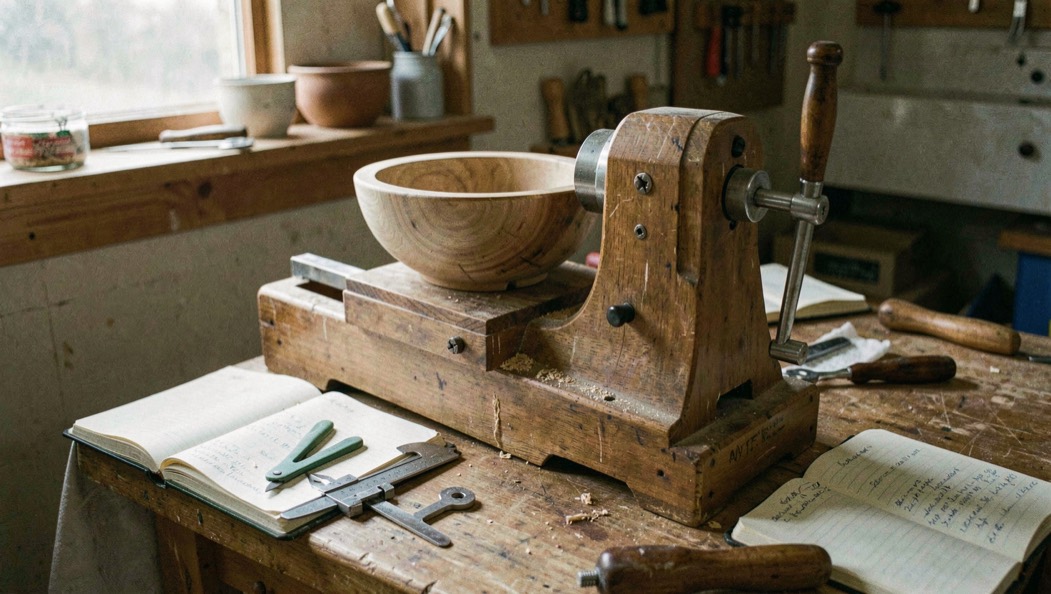
Some makers rough-turn a bowl, allow it to move, then return for final thickness. Others choose a stable, dry blank for a smaller form. The small bowl workflow shows how the decision changes the project.
Understand what is moving
A green bowl blank loses moisture unevenly, and the resulting dimensional change can open end checks, distort a rim or expose hidden tension. Species, thickness, grain orientation, pith and local humidity all influence the schedule. Seal exposed end grain when appropriate, store blanks off the floor and protect them from direct heat. Weighing a sample on a regular schedule can show a trend, but a calendar alone cannot declare a bowl ready. Use the same method and record the room conditions if the comparison matters.
Choose a roughing strategy
Rough-turning a bowl to an even wall leaves room for movement before final shaping. The safe wall thickness depends on diameter, species and the maker’s plan, so do not copy a ratio without checking the blank and the equipment. A dry blank can suit a small project when stability matters more than speed. During the first cut, watch for cracks, bark separation and a blank that changes its hold. Stop the lathe before measuring, and never continue because a schedule says the piece should be fine.
A practical drying record
Write the species, starting weight, blank dimensions, date, storage position and inspection notes on a tag. A cherry bowl that dries beside a steady indoor wall will tell a different story from a thick oak blank left in a heated garage. If a check appears, mark its length and growth rather than hiding it with finish. The limit is unavoidable movement: drying can be managed, not eliminated. Let the eventual design respond to distortion, or return compromised stock to noncritical practice work.
Do not hide a changing blank
Inspect rough-turned bowls at regular intervals and mark new checks with a pencil rather than covering them immediately. A crack that grows toward the rim, a blank that twists beyond the design or a surface that smells damp may require a different project. Keep drying stock away from children, heat sources and unstable shelves, and label it so nobody mistakes it for ready material. The useful outcome is not a perfect schedule. It is knowing enough about the stock to choose a safe next cut or retire the blank without regret.
Precise safety and material claims are grounded in the editorial methodology; workshop guidance is identified as practical synthesis.