The Wood Species Desk: Choose Before You Cut
A species name is only the beginning. Moisture, grain and intended form decide whether a blank feels welcoming.
Why the desk exists
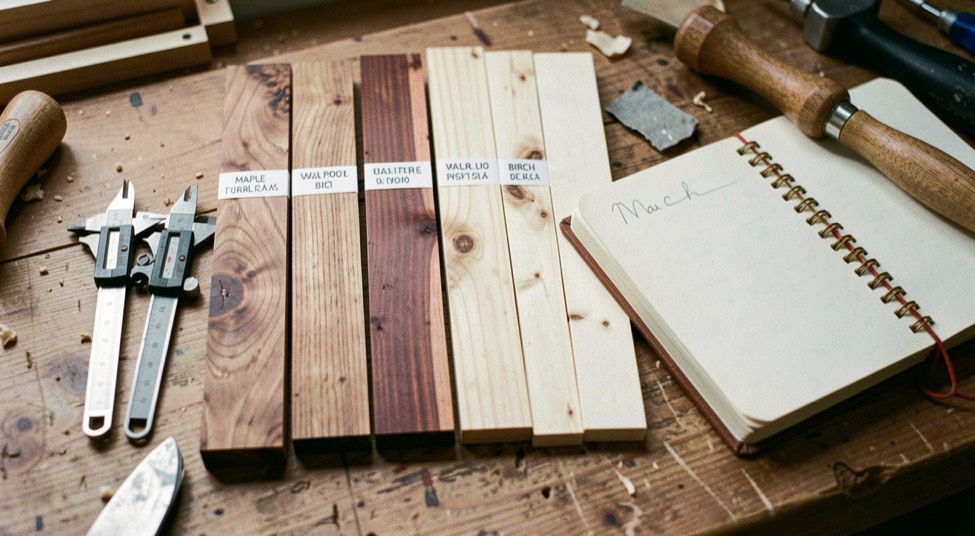
Turning exposes the difference between a wood’s reputation and a particular piece of material. The desk gathers reference hardness with practical notes about grain, drying and finish so the choice happens before the blank is spinning.
Read the fields together
Janka hardness is a comparative indentation measure, not a turning score. Density, grain direction, moisture and figure all change the experience. Start with the full species index and open a record when a form or finish decision is at stake.
Use the caution note
No table can promise a perfect surface. Let the record narrow the choice, then inspect the blank, measure moisture where appropriate, and adjust the plan to the wood in front of you.
Start with the form and environment
Choose a species only after naming the object, its dimensions and where it will live. A thin bowl for a heated kitchen, a covered box for a dry room and a large green-wood platter each impose different movement and finishing questions. Use the desk to compare hardness, grain and drying tendencies, then inspect the actual blank for pith, tension, bark inclusions and checks. A species label cannot predict every board. It is a starting filter that makes the next inspection more deliberate.
Use Janka carefully
Janka hardness is a comparative indentation reference, not a ranking of turning quality and not a direct prediction of edge life. A hard maple blank may cut cleanly with a keen edge, while a soft pine blank can bruise when the earlywood compresses. Grain angle, moisture, figure and the tool’s presentation matter in the same cut. Treat the number as one field among several. When comparing records, keep the units and source context visible, and avoid turning a rounded value into a false precision.
A selection example
Suppose the plan is a small utility bowl for a beginner. American beech or basswood may offer a calm practice surface, while walnut may provide a richer finished appearance but ask for more attention to open grain and sanding. If the blank is green cherry, the design may need a rough-turn and drying stage. Wear eye and face protection, measure moisture when the plan depends on it, and revise the form when the material tells you to. The desk narrows choices; the lathe confirms them.
Read the record beside the sample
The desk becomes useful when a reference entry changes a real shop decision. Keep a small offcut beside the page, compare grain under the same light and note how the edge behaves after a known number of passes. This local observation belongs beside, not above, published values. A record should also say when the comparison is incomplete, such as a species represented by one board or a finish tested only on dry stock. The result is a more honest selection process: informed before the lathe, responsive after the first cut.
Precise safety and material claims are grounded in the editorial methodology; workshop guidance is identified as practical synthesis.