Household Cleaning: Lime, Delicates, Kitchen Odors
A practical guide to removing lime scale in the bathroom, washing delicate garments, and clearing kitchen odors with simple, repeatable workshop methods.
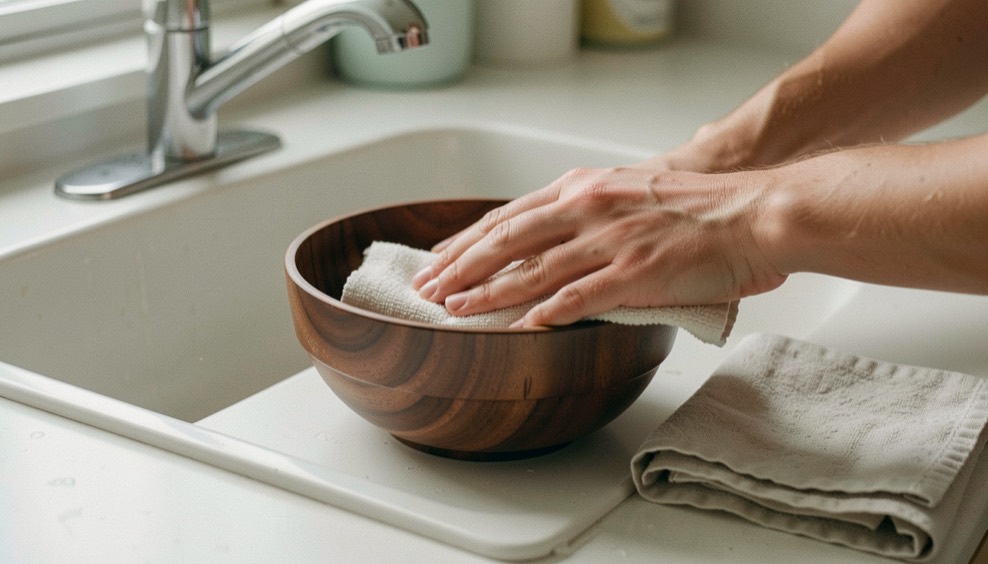
Lime scale comes off with acid, not with force. A cloth soaked in white vinegar or a weak citric acid solution, left on the deposit for ten to twenty minutes, dissolves the mineral film so it wipes away. Delicate clothing survives when the wash is short, cold, and gentle. Kitchen odors fade when the source is removed and the air is allowed to move.
Why lime scale forms where it does
Lime scale is calcium carbonate left behind when hard water evaporates. It builds fastest on surfaces that stay wet and then dry: shower glass, faucet bases, the inside of a kettle, the rim of a drain. The deposit is alkaline, so an acid breaks it down. Vinegar at five percent strength handles light film. Citric acid powder, roughly one tablespoon per liter of warm water, handles heavier crust.
Work in small patches. Soak a cloth or paper towel, press it against the surface, and wait. Scrubbing dry scale with an abrasive pad removes the mineral and the finish underneath it. On chrome and enamel, keep the acid contact under twenty minutes and rinse with clear water afterward. On natural stone, marble, and travertine, skip acid entirely; it etches the surface. Use a pH-neutral soap and a plastic scraper there instead.
A reader who wants a plain reference for the bathroom routine can keep the steps in one place, and a page like lime scale removal and bathroom cleaning serves as a short reminder of the order: soak, wait, rinse, dry. The same sequence applies to a workshop sink or a laundry tub, where hard water leaves the same white ring.
How do I remove lime scale in the bathroom?
Start with the shower head. Unscrew it if the fitting allows, drop it in a bowl of vinegar, and leave it for an hour. Poke the nozzles clear with a pin. For glass doors, mix equal parts white vinegar and water in a spray bottle, wet the panel, and let it sit ten minutes. A squeegee after every shower prevents most of the buildup in the first place.
For the toilet bowl, pour a cup of vinegar around the rim before bed and brush in the morning. For faucets, wrap a vinegar-soaked rag around the base and tie it with a rubber band. For tile grout, use a soft brush and a paste of baking soda and water first, then a light acid rinse. Never mix vinegar with chlorine bleach; the combination releases chlorine gas.
Dry surfaces after rinsing. Standing water is what feeds the next layer of scale. A five-minute habit of wiping the shower walls and the sink edge does more than any single deep clean.
How do I wash delicate clothing correctly?
Read the care label first. If it says hand wash, hand wash. If it says dry clean only, the fiber or the construction usually cannot take water, and a home wash will shrink or distort it.
For washable delicates, use cold water, a mild detergent, and the shortest cycle the machine offers. Turn garments inside out and place them in a mesh bag. Skip the spin at high speed; a low spin or a gentle drain is enough. Wool and silk prefer a detergent without enzymes, since enzymes digest protein fibers over repeated washes.
Hand washing follows the same logic. Fill a basin with cool water, add a capful of mild detergent, and press the garment through the water rather than rubbing it. Let it soak five to ten minutes. Rinse in water of the same temperature; a sudden shift from warm to cold can felt wool. Squeeze gently, never wring. Roll the item in a towel to lift the excess water, then lay it flat on a drying rack, shaped back to its original dimensions.
Dry flat, away from direct sun and radiators. Hanging a wet knit stretches it out of shape. Lace and fine knits dry best on a mesh rack with air moving underneath.
What helps against odors in the kitchen?
Odors in a kitchen come from three places: food waste, standing moisture, and grease film on surfaces. Remove the source first. Empty the bin daily, and rinse the bin itself with hot water and a splash of vinegar. A bin that smells of old coffee grounds will keep smelling no matter how much air freshener goes into the room.
Next, deal with the drain. A half cup of baking soda followed by a cup of vinegar, left to fizz for ten minutes and then flushed with hot water, clears the organic film that holds odor. Do this weekly in a busy kitchen. Do not pour fat down the drain; it coats the pipe and traps smell.
Then the soft surfaces. Sponges, dish towels, and cutting boards hold odors. Run sponges through the dishwasher or microwave them wet for one minute. Wash towels at sixty degrees Celsius, or the hottest setting the fabric allows. Scrub wooden boards with coarse salt and half a lemon, then oil them lightly.
Finally, air. Open a window for ten minutes after cooking. A bowl of baking soda in the refrigerator and one in a cupboard absorbs lingering smells. Coffee grounds and charcoal work the same way. Replace them monthly.
A short routine that holds
Cleaning works better as a rhythm than as a project. Wipe the sink and the shower after use. Run one delicate load a week instead of letting the basket overflow. Empty the kitchen bin every evening and flush the drain every Sunday. These three habits cover most of what the questions above ask about, and they take less time than a single deep clean.
Keep the supplies simple: white vinegar, citric acid, baking soda, a mild detergent, two microfiber cloths, and a soft brush. Store them together so the routine does not stall at the cupboard. A labeled spray bottle of diluted vinegar near the bathroom sink removes the friction that usually stops the job.
When a surface resists, change the method rather than the pressure. More acid and more time beat harder scrubbing on mineral deposits. Cooler water and a shorter cycle beat a strong detergent on delicate fabric. Removing the source beats masking the smell in a kitchen. The chemistry and the fiber both reward patience over force.
When to call it done
A bathroom is clean when the glass runs clear and the faucet base is dry. Delicates are clean when they smell of nothing and hold their shape on the rack. A kitchen is clean when the bin is empty, the drain runs free, and the air moves. None of these states requires a specialty product. They require the sequence: identify the deposit, choose the opposite of it, give it time, and dry the surface afterward.
Precise safety and material claims are grounded in the editorial methodology; workshop guidance is identified as practical synthesis. External reference: https://www.epa.gov/saferchoice.