Sugar Maple
Acer saccharum · medium-high reference feel · 1,450 lbf
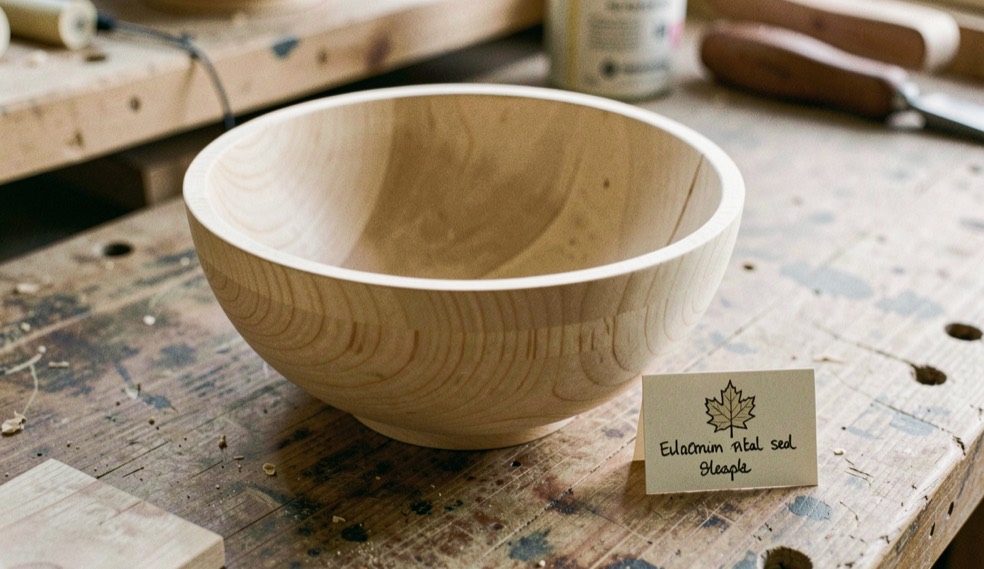
Usually fine and even, with figure possible around curl or burl.
Clean edges and a bright surface; figured stock asks for a sharper, lighter cut.
Allow movement as moisture leaves, especially in thicker blanks. End grain and irregular figure deserve careful sealing and slower transitions.
Bowls, boxes, platters and crisp spindle details.
Clear oil or film finishes keep the pale color legible.
Read the blank before the number
Sugar maple is often chosen for a bright, clean surface, but a hardness reference cannot describe every board. Inspect for curl, burl, tension and end checks before mounting. A sharp bowl gouge with a light presentation preserves figured areas better than a heavy scraping cut. On a small bowl, orient the grain so the rim can be approached deliberately and leave enough wall for movement if the stock is not fully settled. The pale color makes bruising easy to see under raking light, which is useful during practice.
A controlled turning sequence
Use a stable outside reference before hollowing, keep the rest close and sharpen when the edge begins to compress rather than cut. Maple rewards clean shear cuts, but a beginner should not chase a polished surface by forcing the tool. If curl reverses the grain, reduce the bite, support the bevel and take a narrower pass. Face protection remains essential because a hard blank can still shift or fail. A small, dry bowl is a better first test than a thin, highly figured platter.
Finish and limitation
Clear oil or a film finish can keep the pale field legible, but the product must be chosen for the object’s use and cured according to its instructions. A clear coat will not hide torn grain or stop movement in an unstable blank. For example, a maple box lid can show a crisp edge when the tool is sharp, while a bowl exposed to heat still needs simple hand care. Treat the Janka figure as comparison, not a promise of easy turning.
Use the number as a comparative reference, then inspect the actual blank. The drying guide and small bowl workflow show how material behavior changes a project.