Yellow Birch
Betula alleghaniensis · medium-high reference feel · 1,260 lbf
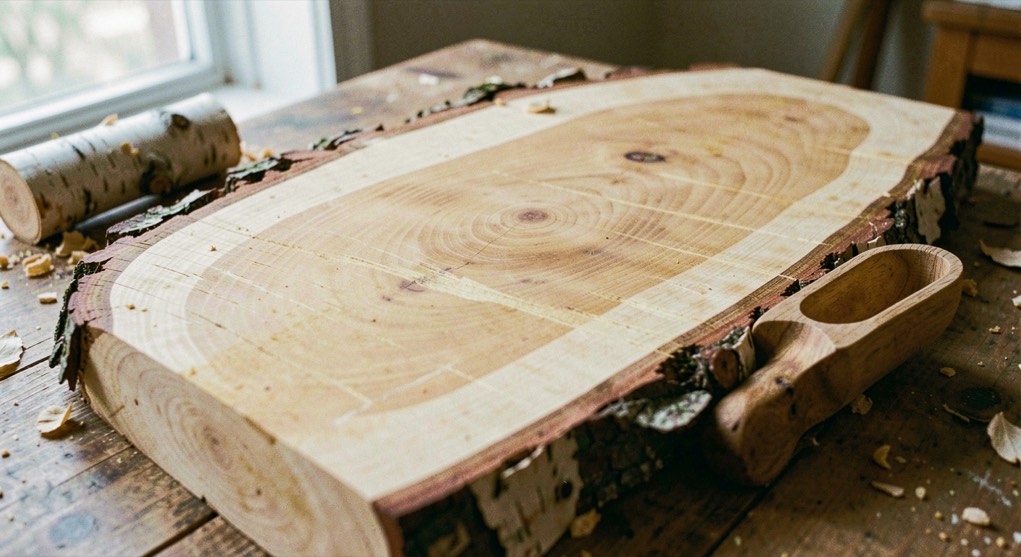
Fine and subdued, sometimes with attractive curl or bark inclusions.
Can reward a keen edge and steady presentation; thin rims need attention.
Dry evenly with attention to thickness and air movement. Irregular bark or pith zones may check first and should be read before turning.
Bowls, vessels, scoops and small utility objects.
Clear finishes emphasize the pale amber tone and quiet grain.
Inspect quiet grain closely
Yellow birch can look uniform until curl, bark edge or pith changes the cut. Mark those areas before mounting and decide whether the design needs a clean rim, a bark feature or a smaller form. A medium-high reference feel does not tell you how an irregular zone will behave. Store blanks with even air movement and inspect thin sections for checking. The pale amber surface benefits from careful lighting because bruising and torn grain can disappear on a busy bench.
Use a keen edge on thin forms
A bowl gouge or spindle tool with a consistent edge lets birch show a clean surface without excessive pressure. Keep the rest close, approach the rim with support and stop if a bark inclusion moves. Thin rims deserve multiple light passes rather than one deep cut. If the surface tears, compare grain direction and tool presentation before changing the grind. Wear face protection and isolate the lathe before touching a shifting blank, even when the piece is small.
Finish for pale clarity
A clear finish can preserve yellow birch’s quiet color and make a small scoop or vessel feel light. Test absorbency on a sample and keep the product’s cure and food-contact instructions visible. For example, a dry-use scoop can be designed around simple hand cleaning, while a bark-edged bowl needs a clear boundary around any fragile section. Finish cannot consolidate loose bark or erase movement. The record is most useful when it names those limits beside the attractive possibilities.
Use the number as a comparative reference, then inspect the actual blank. The drying guide and small bowl workflow show how material behavior changes a project.